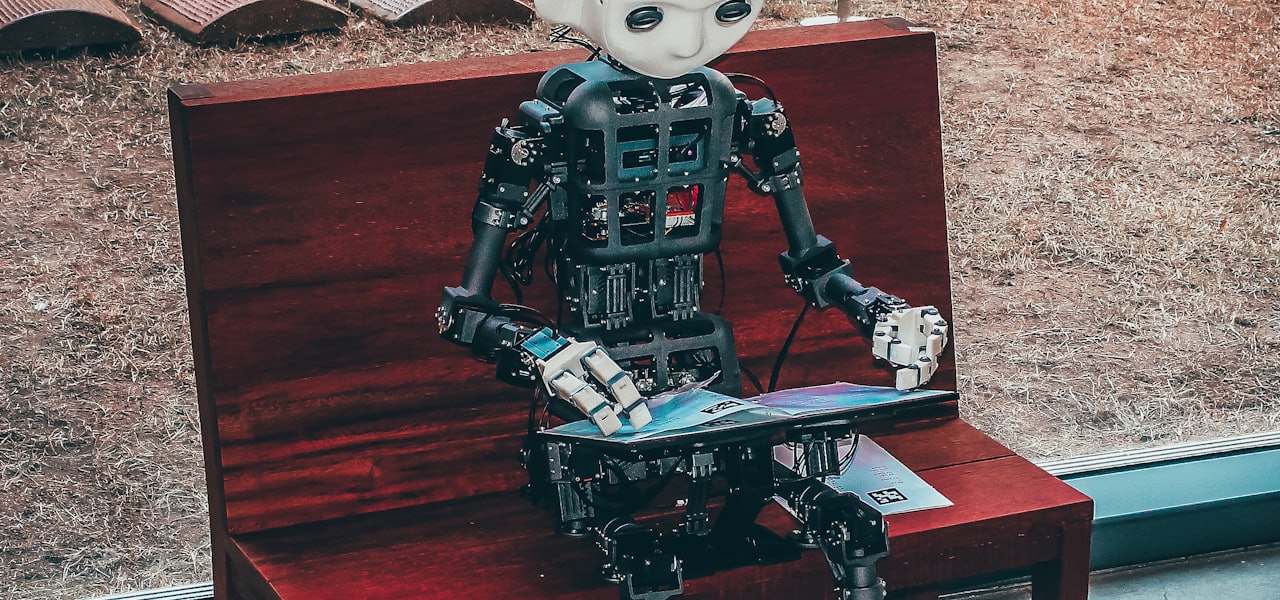
The exploration–exploitation dilemma, also known as the explore–exploit tradeoff, is a fundamental concept in decision-making that arises in many domains. It is depicted as the balancing act between two opposing strategies. Exploitation involves choosing the best option based on current knowledge of the system (which may be incomplete or misleading), while exploration involves trying out new options that may lead to better outcomes in the future at the expense of an exploitation opportunity. Finding the optimal balance between these two strategies is a crucial challenge in many decision-making problems whose goal is to maximize long-term benefits. == Application in machine learning == In the context of machine learning, the exploration–exploitation tradeoff is fundamental in reinforcement learning (RL), a type of machine learning that involves training agents to make decisions based on feedback from the environment. Crucially, this feedback may be incomplete or delayed. The agent must decide whether to exploit the current best-known policy or explore new policies to improve its performance. === Multi-armed bandit methods === The multi-armed bandit (MAB) problem was a classic example of the tradeoff, and many methods were developed for it, such as epsilon-greedy, Thompson sampling, and the upper confidence bound (UCB). See the page on MAB for details. In more complex RL situations than the MAB problem, the agent can treat each choice as a MAB, where the payoff is the expected future reward. For example, if the agent performs an epsilon-greedy method, then the agent will often "pull the best lever" by picking the action that had the best predicted expected reward (exploit). However, it would pick a random action with probability epsilon (explore). Monte Carlo tree search, for example, uses a variant of the UCB method. === Exploration problems === There are some problems that make exploration difficult. Sparse reward. If rewards occur only once a long while, then the agent might not persist in exploring. Furthermore, if the space of actions is large, then the sparse reward would mean the agent would not be guided by the reward to find a good direction for deeper exploration. A standard example is Montezuma's Revenge. Deceptive reward. If some early actions give immediate small reward, but other actions give later large reward, then the agent might be lured away from exploring the other actions. Noisy TV problem. If certain observations are irreducibly noisy (such as a television showing random images), then the agent might be trapped exploring those observations (watching the television). === Exploration reward === This section based on. The exploration reward (also called exploration bonus) methods convert the exploration-exploitation dilemma into a balance of exploitations. That is, instead of trying to get the agent to balance exploration and exploitation, exploration is simply treated as another form of exploitation, and the agent simply attempts to maximize the sum of rewards from exploration and exploitation. The exploration reward can be treated as a form of intrinsic reward. We write these as r t i , r t e {\displaystyle r_{t}^{i},r_{t}^{e}} , meaning the intrinsic and extrinsic rewards at time step t {\displaystyle t} . However, exploration reward is different from exploitation in two regards: The reward of exploitation is not freely chosen, but given by the environment, but the reward of exploration may be picked freely. Indeed, there are many different ways to design r t i {\displaystyle r_{t}^{i}} described below. The reward of exploitation is usually stationary (i.e. the same action in the same state gives the same reward), but the reward of exploration is non-stationary (i.e. the same action in the same state should give less and less reward). Count-based exploration uses N n ( s ) {\displaystyle N_{n}(s)} , the number of visits to a state s {\displaystyle s} during the time-steps 1 : n {\displaystyle 1:n} , to calculate the exploration reward. This is only possible in small and discrete state space. Density-based exploration extends count-based exploration by using a density model ρ n ( s ) {\displaystyle \rho _{n}(s)} . The idea is that, if a state has been visited, then nearby states are also partly-visited. In maximum entropy exploration, the entropy of the agent's policy π {\displaystyle \pi } is included as a term in the intrinsic reward. That is, r t i = − ∑ a π ( a | s t ) ln π ( a | s t ) + ⋯ {\displaystyle r_{t}^{i}=-\sum _{a}\pi (a|s_{t})\ln \pi (a|s_{t})+\cdots } . === Prediction-based === This section based on. The forward dynamics model is a function for predicting the next state based on the current state and the current action: f : ( s t , a t ) ↦ s t + 1 {\displaystyle f:(s_{t},a_{t})\mapsto s_{t+1}} . The forward dynamics model is trained as the agent plays. The model becomes better at predicting state transition for state-action pairs that had been done many times. A forward dynamics model can define an exploration reward by r t i = ‖ f ( s t , a t ) − s t + 1 ‖ 2 2 {\displaystyle r_{t}^{i}=\|f(s_{t},a_{t})-s_{t+1}\|_{2}^{2}} . That is, the reward is the squared-error of the prediction compared to reality. This rewards the agent to perform state-action pairs that had not been done many times. This is however susceptible to the noisy TV problem. Dynamics model can be run in latent space. That is, r t i = ‖ f ( s t , a t ) − ϕ ( s t + 1 ) ‖ 2 2 {\displaystyle r_{t}^{i}=\|f(s_{t},a_{t})-\phi (s_{t+1})\|_{2}^{2}} for some featurizer ϕ {\displaystyle \phi } . The featurizer can be the identity function (i.e. ϕ ( x ) = x {\displaystyle \phi (x)=x} ), randomly generated, the encoder-half of a variational autoencoder, etc. A good featurizer improves forward dynamics exploration. The Intrinsic Curiosity Module (ICM) method trains simultaneously a forward dynamics model and a featurizer. The featurizer is trained by an inverse dynamics model, which is a function for predicting the current action based on the features of the current and the next state: g : ( ϕ ( s t ) , ϕ ( s t + 1 ) ) ↦ a t {\displaystyle g:(\phi (s_{t}),\phi (s_{t+1}))\mapsto a_{t}} . By optimizing the inverse dynamics, both the inverse dynamics model and the featurizer are improved. Then, the improved featurizer improves the forward dynamics model, which improves the exploration of the agent. Random Network Distillation (RND) method attempts to solve this problem by teacher–student distillation. Instead of a forward dynamics model, it has two models f , f ′ {\displaystyle f,f'} . The f ′ {\displaystyle f'} teacher model is fixed, and the f {\displaystyle f} student model is trained to minimize ‖ f ( s ) − f ′ ( s ) ‖ 2 2 {\displaystyle \|f(s)-f'(s)\|_{2}^{2}} on states s {\displaystyle s} . As a state is visited more and more, the student network becomes better at predicting the teacher. Meanwhile, the prediction error is also an exploration reward for the agent, and so the agent learns to perform actions that result in higher prediction error. Thus, we have a student network attempting to minimize the prediction error, while the agent attempting to maximize it, resulting in exploration. The states are normalized by subtracting a running average and dividing a running variance, which is necessary since the teacher model is frozen. The rewards are normalized by dividing with a running variance. Exploration by disagreement trains an ensemble of forward dynamics models, each on a random subset of all ( s t , a t , s t + 1 ) {\displaystyle (s_{t},a_{t},s_{t+1})} tuples. The exploration reward is the variance of the models' predictions. === Noise === For neural network–based agents, the NoisyNet method changes some of its neural network modules by noisy versions. That is, some network parameters are random variables from a probability distribution. The parameters of the distribution are themselves learnable. For example, in a linear layer y = W x + b {\displaystyle y=Wx+b} , both W , b {\displaystyle W,b} are sampled from Gaussian distributions N ( μ W , Σ W ) , N ( μ b , Σ b ) {\displaystyle {\mathcal {N}}(\mu _{W},\Sigma _{W}),{\mathcal {N}}(\mu _{b},\Sigma _{b})} at every step, and the parameters μ W , Σ W , μ b , Σ b {\displaystyle \mu _{W},\Sigma _{W},\mu _{b},\Sigma _{b}} are learned via the reparameterization trick.
Phrase structure grammar
The term phrase structure grammar was originally introduced by Noam Chomsky as the term for grammar studied previously by Emil Post and Axel Thue (Post canonical systems). Some authors, however, reserve the term for more restricted grammars in the Chomsky hierarchy: context-sensitive grammars or context-free grammars. In a broader sense, phrase structure grammars are also known as constituency grammars. The defining character of phrase structure grammars is thus their adherence to the constituency relation, as opposed to the dependency relation of dependency grammars. == History == In 1956, Chomsky wrote, "A phrase-structure grammar is defined by a finite vocabulary (alphabet) Vp, and a finite set Σ of initial strings in Vp, and a finite set F of rules of the form: X → Y, where X and Y are strings in Vp." == Constituency relation == In linguistics, phrase structure grammars are all those grammars that are based on the constituency relation, as opposed to the dependency relation associated with dependency grammars; hence, phrase structure grammars are also known as constituency grammars. Any of several related theories for the parsing of natural language qualify as constituency grammars, and most of them have been developed from Chomsky's work, including Government and binding theory Generalized phrase structure grammar Head-driven phrase structure grammar Lexical functional grammar The minimalist program Nanosyntax Further grammar frameworks and formalisms also qualify as constituency-based, although they may not think of themselves as having spawned from Chomsky's work, e.g. Arc pair grammar, and Categorial grammar.
PerfKitBenchmarker
PerfKit Benchmarker is an open source benchmarking tool used to measure and compare cloud offerings. PerfKit Benchmarker is licensed under the Apache 2 license terms. PerfKit Benchmarker is a community effort involving over 500 participants including researchers, academic institutions and companies together with the originator, Google. == General == PerfKit Benchmarker (PKB) is a community effort to deliver a repeatable, consistent, and open way of measuring Cloud Performance. It supports a growing list of cloud providers including: Alibaba Cloud, Amazon Web Services, CloudStack, DigitalOcean, Google Cloud Platform, Kubernetes, Microsoft Azure, OpenStack, Rackspace, IBM Bluemix (Softlayer). In addition to Cloud Providers to supports container orchestration including Kubernetes [1] and Mesos [2] and local "static" workstations and clusters of computers [3]. The goal is to create an open source living benchmark [framework] that represents how Cloud developers are building applications, evaluating Cloud alternatives, learning how to architect applications for each cloud. Living because it will change and morph quickly as developers change. PerfKit Benchmarker measures the end to end time to provision resources in the cloud, in addition to reporting on the most standard metrics of peak performance, e.g.: latency, throughput, time-to-complete, IOPS. PerfKit Benchmarker reduces the complexity in running benchmarks on supported cloud providers by unified and simple commands. It's designed to operate via vendor provided command line tools. PerfKit Benchmarker contains a canonical set of public benchmarks. All benchmarks are running with default/initial state and configuration (Not tuned to in favor of any providers). This provides a way to benchmark across cloud platforms, while getting a transparent view of application throughput, latency, variance, and overhead. == History == PerfKit Benchmarker (PKB) was started by Anthony F. Voellm, Alain Hamel, and Eric Hankland at Google in 2014. Once an initial "alpha" was in place Anthony F. Voellm and Ivan Santa Maria Filho built a community including ARM, Broadcom, Canonical, CenturyLink, Cisco, CloudHarmony, CloudSpectator, EcoCloud@EPFL, Intel, Mellanox, Microsoft, Qualcomm Technologies, Inc., Rackspace, Red Hat, Tradeworx Inc., and Thesys Technologies LLC. This community worked together behind the scenes in a private GitHub project to create an open way to measure cloud performance. This community released the first public "beta" was released on February 11, 2015, and announced in a blog post at which point the GitHub project was open to everyone. After almost a year and with large adaption (600+ participants on GitHub) the V1.0.0 was released along with a detailed architectural design on December 10, 2015. == Benchmarks == A list of available benchmarks from PerfKitBenchmarker: (The latest set of benchmarks can be found at GitHub readme file.) == Industry participants == Since Google open sourced the PerfKitBenchmarker, it became a community effort from over 30 leading researchers, academic schools and industry companies. Those organizations include: ARM, Broadcom, Canonical, CenturyLink, Cisco, CloudHarmony, Cloud Spectator, EcoCloud@EPFL, Intel, Mellanox, Microsoft, Qualcomm Technologies, Rackspace, Red Hat, and Thesys Technologies. In addition, Stanford and MIT are leading quarterly discussions on default benchmarks and settings proposed by the community. EcoCloud@EPFL is integrating CloudSuite into PerfKit Benchmarker. == Example runs == On Google Cloud Platform On AWS On Azure On Rackspace On a local machine
CloudHealth Technologies
CloudHealth Technologies, now CloudHealth by VMware, is a software company based in Boston, Massachusetts. The company provides cloud computing services related to cost management, governance, automation, security, and performance. == History == CloudHealth Technologies was founded by Joe Kinsella in 2012. Dan Phillips joined as CEO and co-founder in late 2012, and Dave Eicher joined as co-Founder in January 2013. In May 2016, the company announced plans to expand from its Boston headquarters with branch offices in San Francisco, London, Washington, D.C., Sydney, Amsterdam, Tel Aviv, and Singapore. Headquarters moved in Boston from Fort Point to 100 Summer Street in the Spring of 2018, tripling in square footage. In September 2017, Tom Axbey—who was previously at Rave Mobile Safety—joined as the new CEO and President. VMware announced its intention to acquire CloudHealth Technologies on August 27, 2018. The acquisition is "part of the information technology company's continued push into cloud-based software services" according to Reuters. The deal closed on October 4, 2018, and was reported to be in excess of $500 million. == Technology == Delivered through a software as a service (SaaS) model, CloudHealth Technologies's platform collects and analyzes data from cloud computing services and other IT environments so clients can report on costs, inform their business models, and project future trends. CloudHealth Technologies is compatible with Amazon Web Services, Microsoft Azure, Google Cloud Platform, multicloud, and hybrid cloud environments. CloudHealth Technologies has received Amazon Web Services(AWS) Education Competency status, AWS Migration Competency status and achieved SOC 2 Type 2 Compliance. == Funding == As of June 2017, CloudHealth Technologies has raised a total of $85.7 million through four rounds of funding. In March 2013, CloudHealth Technologies announced that it had secured $4.5 million in Series A funding. This round was led by .406 Ventures and Sigma Prime Ventures. In January 2015, CloudHealth Technologies secured $12 million in Series B funding. This round was led by Scale Venture Partners, .406 Ventures, and Sigma Prime Ventures, and was followed by a $3.2 million extension round. In May 2016, CloudHealth Technologies announced $20 million in Series C funding, led by Sapphire Ventures, .406 Ventures, Scale Venture Partners and Sigma Prime Ventures. In June 2017, CloudHealth Technologies secured $46 million in Series D funding led by Kleiner Perkins Caufield & Byers with participation from Meritech Capital Partners, Sapphire Ventures, 406 Ventures, and Scale Venture Partners. == Competition == As of March 2023, CloudHealth Technologies competes with Cloudability by Apptio and CloudCheckr by NetApp.
Hildon
Hildon is an application framework originally developed for mobile devices (PDAs, mobile phones, etc.) running the Linux operating system as well as the Symbian operating system. The Symbian variant of Hildon was discontinued with the cancellation of Series 90. It was developed by Nokia for the Maemo operating system. It focuses on providing a finger-friendly interface. It is primarily a set of GTK extensions that provide mobile-device–oriented functionality, but also provides a desktop environment that includes a task navigator for opening and switching between programs, a control panel for user settings, and status bar, task bar and home applets. It is standard on the Maemo platform used by the Nokia Internet Tablets and the Nokia N900 smartphone. Hildon has also been selected as the framework for Ubuntu Mobile and Embedded Edition. Hildon was an early instance of a software platform for generic computing in a tablet device intended for internet consumption. But Nokia didn't commit to it as their only platform for their future mobile devices and the project competed against other in-house platforms. The strategic advantage of a modern platform was not exploited, being displaced by the Series 60, though its development is continued by the Maemo Leste project. == Components == The Hildon framework includes components that effectively provide a desktop environment. === Hildon Application Manager === Hildon Application Manager is the Hildon graphical package manager, it uses the Debian package management tools APT (Advanced Packaging Tool and dpkg) and provides a graphical interface for installing, updating and removing packages. It is a limited package manager, designed specifically for end-users, in that it doesn't directly offer the user access to system files and libraries. With the Diablo release of Maemo, Hildon Application Manager now supports "Seamless Software Update" (SSU), which implements a variety of features to allow system upgrades to be easily performed through it. === Hildon Control Panel === Hildon Control Panel is the user settings interface for Hildon. It provides simple access to control panels used to change system settings. === Hildon Desktop === Hildon Desktop is the primary UI component of Hildon, so makes up the bulk of what a user will see as "Hildon". It controls application launching and switching, general system control, and provides interfaces for task bar (application menu and task switcher), status bar (brightness and volume control), and home (internet radio and web search) applets. === Hildon Library === The Hildon library, originally developed by Nokia but since Maemo 5, developed by Igalia and Lanedo (who developed MaemoGTK+, the Maemo version of GTK+). It is a set of mobile specific GTK+ widgets for applications in Maemo. Up to Maemo 4, these widgets were designed for stylus usage. However, in Maemo 5, most widgets were deprecated and new widgets for direct finger manipulation were introduced, including a kinetic panning container.
List of C software and tools
This is a list of software and programming tools for the C programming language, including libraries, debuggers, compilers, integrated development environments (IDEs), and other related development tools and utilities. == Libraries and tools == Adns — asynchronous DNS resolver library Advanced Linux Sound Architecture — API for sound card device drivers Allegro — cross-platform software library for video game development Apache Portable Runtime — Apache web server tool set of APIs that map to the underlying operating system Argon2 — memory-hard password hashing library Berkeley DB — embedded database software library for key/value data Binary File Descriptor library — binary file manipulation library in the GNU toolchain Boehm garbage collector – conservative garbage collector Borland Graphics Interface — graphics library for Borland compilers BSAFE — FIPS 140-2 validated cryptography library Chipmunk — 2D real-time rigid body physics engine C POSIX library — specification of a C standard library for POSIX systems C standard library – standard library for the C programming language Cairo – vector graphics library API for software developers CFD General Notation System (CGNS) — data format and library for computational fluid dynamics cJSON — lightweight JSON parser CLIPS — public-domain software tool for building expert systems Core Audio — low-level API for dealing with sound in Apple's macOS and iOS operating systems Core Foundation — API for macOS and iOS and other Apple operating systems Core Image — GPU accelerated image processing technology for Apple operating systems with Quartz graphics rendering layer. Core Text — text layout and font rendering API for macOS and iOS. Cryptlib — portable cryptography library cURL / libcurl — CLI app for uploading and downloading individual files, such as a URL from a web server over HTTP. DevIL — cross-platform image library for loading and converting file formats DirectFB — graphics acceleration and input device handling library Dld — dynamic loading library Expat — stream-oriented XML 1.0 parser library, written in C99. FFmpeg — multimedia framework for audio/video processing Fontconfig — font customization and configuration library FreeTDS — database library for Sybase and Microsoft SQL Server FreeType — render text onto bitmaps with a font rasterization engine GD Graphics Library — image creation and manipulation library GDK — graphics abstraction layer for GTK GEGL — graph-based image processing framework GIO — I/O and virtual file system library in GLib GLib — utility library providing data structures, event loops, and portability functions. glibc — GNU implementation of the C standard library GLFW — library for OpenGL contexts, windows, and input device handling GNet — networking library for GLib GNU Libtool — Library management tool GNU portability library — collection of portability routines for GNU software GNU Portable Threads — POSIX/ANSI-C based user space thread library for UNIX for scheduling multithreading GNU Readline — command-line editing library GnuTLS — secure communications (TLS/SSL) library GObject — object system library for GNOME GTK — widget toolkit for creating graphical user interfaces GTK Scene Graph Kit (GSK) — scene graph and rendering toolkit for GTK HDF — file format and library for managing large datasets Integrated Performance Primitives — Intel library of optimized multimedia and data processing routines IUP — portable GUI toolkit J2K-Codec — JPEG 2000 image codec JasPer — reference implementation of the codec specified in the JPEG-2000 Part-1 standard LDAP API — API for interacting with Lightweight Directory Access Protocol LZO — lossless compression library Liba52 — decoder for A/52 (AC-3) audio streams libarchive — reading and writing various archive and compression formats Libart — 2D graphics library Libavcodec — codec library from FFmpeg Libavdevice — library for handling multimedia devices Libavfilter — audio and video filter library Libavformat — library for muxing and demuxing multimedia Libpcap — packet capture library Libdca — decoder for DTS audio Libdvdcss — access to encrypted DVD-Video discs libevent — asynchronous event notification callbacks libffi — foreign function interface libfuse — userspace filesystem Libgegl — programming interface to GEGL image processing libgcrypt — cryptography Libgimp — plug-in development library for GIMP Libhybris — compatibility layer for running Android libraries on Linux Libinput — input device library for Wayland and X.Org libjpeg — JPEG image library libLAS — reading and writing geospatial data encoded in the ASPRS laser (LAS) file format libmicrohttpd — small C library for embedding HTTP server functionality Libmpcodecs — media player codec library from MPlayer Libmpdemux — demultiplexing library from MPlayer libpng — PNG image format Libpostproc — video post-processing library from FFmpeg libpq — PostgreSQL client LibreSSL — fork of OpenSSL for TLS Librsb — parallel library for sparse matrix computations Librsvg — SVG rendering library libsndfile — reading and writing audio files libsodium — easy-to-use cryptography library Libswscale — image scaling and colorspace conversion library LibTIFF — TIFF image handling library Libusb — USB device access library Libuv — asynchronous I/O and event loop library LibVLC — media player engine from VLC LibVNCServer — implementation of the VNC server protocol Libvpx — VP8 and VP9 video codec library Libwww — early World Wide Web protocol library from W3C libxml2 — XML parsing Libxslt — XSLT library for the GNOME Project libzip — ZIP archives Lightning Memory-Mapped Database — fast key–value database engine LittleCMS — open-source color management system LZ4 — fast lossless compression algorithm LZFSE — compression library developed by Apple MatrixSSL — lightweight TLS implementation Mbed TLS — portable cryptography and TLS library MediaLib — Sun Microsystems library for multimedia processing Mesa — OpenGL and Vulkan graphics library Microwindows — small windowing system for embedded devices Ming — library for generating SWF (Flash) files Mongoose — embedded web server and networking library Mpg123 — MP3 audio decoding library MPIR — multiple-precision arithmetic library MsQuic — Microsoft implementation of the QUIC transport protocol MuJoCo — physics engine for robotics and control Mustache — logic-less templating library Ncurses — terminal control library Nettle — low-level cryptography library Newt — text-based user interface library Netpbm — graphics conversion and processing library Nghttp2 — implementation of the HTTP/2 protocol Oniguruma — regular expression library Open Asset Import Library — library to import/export 3D model formats OpenCL — parallel computing API/library OpenCV — computer vision OpenGL — API for rendering 2D and 3D vector graphics OpenGL Utility Library — OpenGL utility functions OpenJPEG — JPEG 2000 image codec OpenSSL — SSL and TLS protocols and cryptography library Pango — layout engine library which works with the HarfBuzz shaping engine for displaying multi-language text perf (Linux) — performance analyzing tool PCRE — regular expression library PROJ — library for map projections and coordinate transforms Quartz 2D — 2D graphics rendering API for macOS and iOS platforms, part of the Core Graphics framework. Raylib — simple library for games and multimedia Redland RDF Application Framework — RDF data storage library S2n-tls — TLS implementation from AWS Setcontext — context switching library functions SDL — Simple DirectMedia Layer systemd — system and service manager libraries for Linux Tk — GUI widgets for building graphical user interfaces VDPAU — video decoding acceleration API Vorbis — audio compression codec library VTD-XML — high-performance XML parser Wimlib — library for handling Windows Imaging Format disk images Windows.h — base Windows API header file WolfSSH — lightweight SSH library WolfSSL — lightweight SSL/TLS library X Toolkit Intrinsics — toolkit library for the X Window System x264 — H.264 video codec library XCB — C binding for the X Window System protocol Xft — font rendering library using FreeType Xlib — low-level X Window System API XMDF — eXtensible Model Data Format for scientific data XMLStarlet — XML command-line toolkit zlib — data compression Zopfli — data compression library that performs deflate, gzip and zlib data encoding. Zstd — fast data compression library == Integrated development environments == Anjuta — GNOME IDE CLion — cross-platform commercial IDE from JetBrains Code::Blocks — cross-platform open-source IDE CodeLite — open-source IDE Dev-C++ Eclipse CDT Geany — text editor with IDE features KDevelop — KDE IDE NetBeans Qt Creator SlickEdit Visual Studio Xcode === Online IDEs === CodeSandbox — online IDE primarily for web development with some C support via containers GitHub Codespaces — cloud-based online IDE developed by GitHub Google Cloud Shell — browser-based shell and editor that can comp
StatCrunch
StatCrunch is a web-based statistical software application from Pearson Education. StatCrunch was originally created for use in college statistics courses. As a full-featured statistics package, it is now also used for research and for other statistical analysis purposes. == History == American statistics professor Webster West created StatCrunch in 1997. Over the next 19 years West assisted by others added many more statistical procedures and graphing capabilities, and made user interface improvements. In 2005, West received two awards for StatCrunch: the CAUSEweb Resource of the Year Award and the MERLOT Classics Award. In 2013, the StatCrunch Java code was rewritten in JavaScript in order to avoid Java browser security problems, and so that it would run on iOS and Android. In 2015, new ways of importing data were added, including importing multi-page data directly from Wikipedia tables and other Web sources, and also importing with drag-and-drop for various data formats. In 2016, StatCrunch was acquired by Pearson Education, which had already been serving as the primary distributor of StatCrunch for several years. == Software == A StatCrunch license is included with many of Pearson's statistical textbooks. Because StatCrunch is a web application, it works on multiple platforms, including Windows, macOS, iOS, and Android. Data in StatCrunch is represented in a "data table" view, which is similar to a spreadsheet view, but unlike spreadsheets, the cells in a data table can only contain numbers or text. Formulas cannot be stored in these cells. There are many ways to import data into StatCrunch. Data can be typed directly into cells in the data table. Entire blocks of data may be cut-and-pasted into the data table. Text files (.csv, .txt, etc.) and Microsoft Excel files (.xls and .xlsx) can be drag-and-dropped into the data table. Data can be pulled into StatCrunch directly from Wikipedia tables or other Web tables, including multi-page tables. Data can be loaded directly from Google Drive and Dropbox. Shared data sets saved by other StatCrunch community users can be searched for by title or keyword and opened in a data table. Graphs, results, and reports created by StatCrunch can be shared with other users, in addition to the sharing of data sets. StatCrunch has a library of data transformation functions. StatCrunch can also recode and reorganize data. All data is stored in memory, and all processing happens on the client, so response is fast, even with large data sets. StatCrunch can interact with multiple graphs simultaneously. If a user selects a data point on one graph, then that same data point is highlighted on all other displayed graphs. In addition to standard statistical and graphing procedures, StatCrunch has a collection of about forty "applets" which illustrate statistical concepts interactively.